
 EN
EN
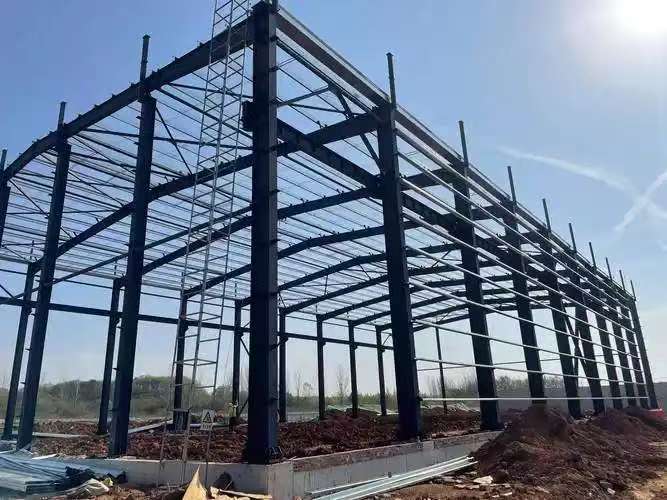
Modern construction demands precision, durability, and cost-effectiveness in every structural element. When architects and engineers plan steel framework projects, the selection of appropriate structural components becomes paramount to project success. The welded square steel tube has emerged as a cornerstone material in contemporary construction, offering exceptional versatility and structural integrity across diverse applications. From high-rise buildings to industrial facilities, these steel components provide the foundation for reliable, long-lasting structures that meet stringent safety standards while maintaining economic viability.
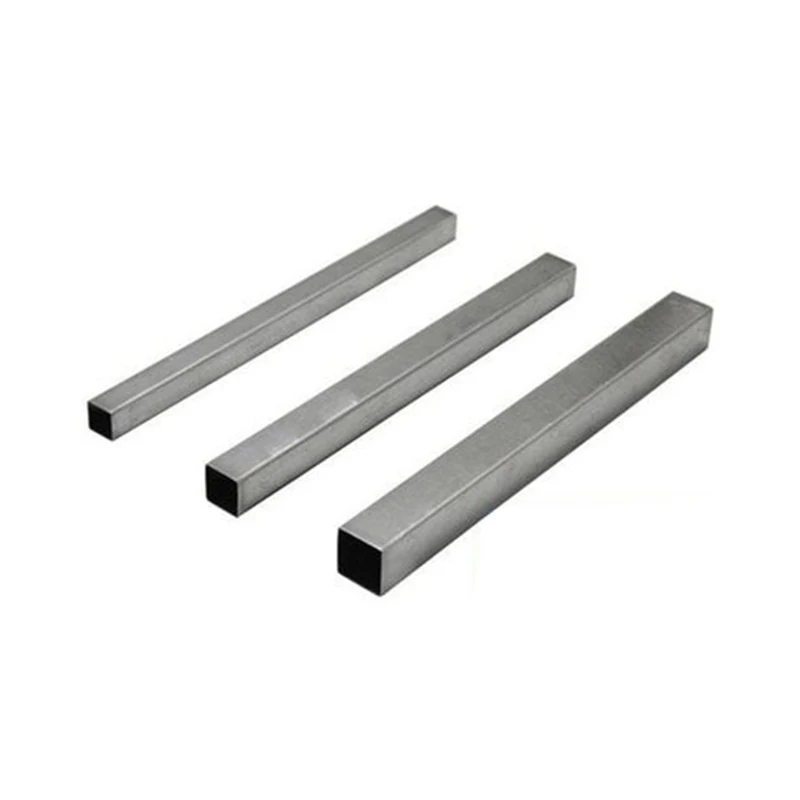
Structural Integrity and Load Distribution
Understanding Load-Bearing Capacity
The fundamental strength characteristics of welded square steel tube systems directly impact project feasibility and safety margins. Professional engineers must calculate precise load distributions across horizontal and vertical members to ensure structural compliance with building codes. Square steel tubes demonstrate superior compression and tension resistance compared to traditional rolled sections, making them ideal for applications requiring high strength-to-weight ratios. The uniform wall thickness distribution in quality welded square steel tube products ensures consistent performance under varying stress conditions.
Advanced finite element analysis reveals how welded square steel tube configurations respond to dynamic loading scenarios, including seismic activity and wind pressure. The closed cross-sectional geometry provides enhanced torsional rigidity, preventing unwanted structural deformation during extreme weather events. Construction professionals increasingly specify welded square steel tube assemblies for projects requiring superior lateral stability and resistance to buckling failures.
Connection Design Optimization
Proper connection methodology between welded square steel tube elements determines overall structural performance and longevity. Engineers must consider thermal expansion, fatigue resistance, and accessibility for future maintenance when designing joint configurations. The flat surface profiles of square tubes facilitate simplified welding procedures and reduce fabrication costs compared to complex curved sections. Quality welded square steel tube products feature consistent wall thickness that enables predictable penetration depths during fusion welding operations.
Bolted connections using welded square steel tube members require careful attention to hole spacing and edge distances to prevent local stress concentrations. The regular geometry allows for standardized connection hardware and simplified installation procedures. Modern welded square steel tube manufacturing processes ensure dimensional accuracy that supports tight tolerances in connection design, reducing field modification requirements during construction.
Material Properties and Manufacturing Excellence
Steel Grade Selection Criteria
The chemical composition and mechanical properties of welded square steel tube materials significantly influence structural performance and service life. High-strength low-alloy steels provide enhanced yield strength while maintaining excellent weldability characteristics essential for complex fabrication requirements. Carbon content optimization in welded square steel tube production balances strength requirements with ductility needs for seismic applications. Proper steel grade selection ensures compatibility with specified welding procedures and heat treatment protocols.
Trace element control during welded square steel tube manufacturing prevents harmful inclusions that could compromise structural integrity under cyclic loading conditions. Sulfur and phosphorus content limitations ensure superior impact toughness at low temperatures, critical for structures exposed to harsh environmental conditions. The controlled cooling rates used in modern welded square steel tube production create fine-grained microstructures that optimize both strength and toughness properties.
Quality Control and Testing Standards
Comprehensive testing protocols validate the structural suitability of welded square steel tube products before installation in critical applications. Non-destructive examination techniques including ultrasonic testing and magnetic particle inspection detect internal discontinuities that could propagate under service loads. Dimensional verification ensures that welded square steel tube products meet specified tolerances for straightness, wall thickness uniformity, and cross-sectional dimensions.
Mechanical property testing validates tensile strength, yield strength, and elongation characteristics against applicable standards such as ASTM A500 or EN 10219. Impact testing at specified temperatures confirms adequate toughness for dynamic loading applications. Surface quality inspection ensures that welded square steel tube products are free from harmful surface defects that could initiate fatigue cracks during service.
Geometric Design Considerations
Cross-Sectional Optimization
The square geometry of welded square steel tube sections provides optimal material distribution for both bending and axial loading scenarios. Structural efficiency calculations demonstrate superior section modulus values compared to equivalent weight open sections, enabling more economical designs with reduced material consumption. The closed cross-section eliminates the need for additional bracing elements typically required with open structural shapes, simplifying overall framework geometry.
Wall thickness selection in welded square steel tube applications balances strength requirements with weight considerations and fabrication constraints. Thin-walled sections maximize interior space while maintaining adequate structural capacity for typical building loads. The uniform thickness distribution ensures predictable buckling behavior under compression loading, allowing engineers to utilize full material capacity in design calculations.
Size Range and Standardization
Standardized dimensional ranges for welded square steel tube products facilitate design consistency and procurement efficiency across multiple project phases. Common size increments allow for modular design approaches that streamline fabrication and installation procedures. The availability of welded square steel tube products in various wall thickness options enables fine-tuning of structural properties without changing overall framework geometry.
Custom sizing capabilities in welded square steel tube manufacturing accommodate specialized applications requiring non-standard dimensions. However, standard size utilization typically provides cost advantages through economies of scale and reduced inventory requirements. The dimensional accuracy achievable in modern welded square steel tube production supports tight construction tolerances essential for prefabricated construction methods.
Environmental Factors and Durability
Corrosion Protection Strategies
Long-term structural performance of welded square steel tube systems depends heavily on effective corrosion protection measures tailored to specific environmental exposures. Atmospheric corrosion rates vary significantly based on humidity levels, salt exposure, and industrial pollutants that can accelerate steel deterioration. Protective coating systems for welded square steel tube applications must consider surface preparation requirements, application methods, and maintenance accessibility throughout the structure's service life.
Hot-dip galvanizing provides excellent corrosion protection for welded square steel tube elements in moderate exposure environments, offering decades of maintenance-free service. The zinc coating bonds metallurgically with the steel substrate, creating a sacrificial barrier that protects even damaged areas through cathodic protection mechanisms. Alternative coating systems including organic coatings and weathering steel compositions offer specialized solutions for specific environmental conditions encountered with welded square steel tube installations.
Temperature Effects and Thermal Management
Thermal expansion characteristics of welded square steel tube structures require careful consideration during design development to prevent excessive stresses and connection failures. The coefficient of thermal expansion for structural steel necessitates expansion joints or flexible connections in long-span applications using welded square steel tube members. Temperature-induced stresses can reach significant magnitudes in statically indeterminate structures, potentially compromising structural integrity if not properly addressed.
Fire resistance properties of welded square steel tube assemblies influence building design requirements and safety system specifications. The mass-to-surface area ratio affects heating rates during fire exposure, with thicker wall sections providing improved fire resistance compared to thin-walled alternatives. Intumescent coatings and concrete encasement offer enhanced fire protection for welded square steel tube structures in high-risk applications requiring extended fire resistance ratings.
Economic and Practical Advantages
Cost-Effectiveness Analysis
The economic benefits of welded square steel tube utilization extend beyond initial material costs to encompass fabrication efficiency, installation speed, and long-term maintenance requirements. Simplified cutting and fitting procedures reduce labor costs during fabrication phases, while the regular geometry enables automated processing techniques that improve productivity and consistency. The structural efficiency of welded square steel tube sections often permits lighter overall framework designs that reduce foundation requirements and transportation costs.
Lifecycle cost analysis demonstrates the value proposition of quality welded square steel tube products through extended service life and reduced maintenance intervals. The predictable performance characteristics enable accurate cost projections for maintenance and replacement scheduling. Standardized connection details and readily available replacement components ensure cost-effective maintenance procedures throughout the structure's operational life.
Installation and Construction Benefits
Field installation advantages of welded square steel tube systems include simplified alignment procedures and reduced crane time requirements for complex assemblies. The flat surfaces provide stable bearing conditions for temporary supports during construction, improving safety and productivity on active jobsites. Modular fabrication approaches using welded square steel tube components enable off-site assembly under controlled conditions, reducing weather delays and improving quality control.
The dimensional stability of welded square steel tube products minimizes field adjustments and rework during construction phases. Precise manufacturing tolerances ensure proper fit-up between components, reducing the need for custom modifications that can compromise structural performance. Quality welded square steel tube suppliers provide technical support and engineering assistance that streamline project delivery and ensure optimal structural outcomes.
FAQ
What are the key advantages of welded square steel tube over other structural shapes?
Welded square steel tube offers superior torsional rigidity, efficient material distribution, and simplified connection details compared to open structural sections. The closed cross-section eliminates the need for additional bracing elements while providing excellent strength-to-weight ratios. The flat surfaces facilitate easier welding and connection procedures, reducing fabrication costs and improving construction efficiency.
How do I determine the appropriate wall thickness for my welded square steel tube application?
Wall thickness selection depends on loading conditions, span lengths, and deflection requirements specific to your project. Structural calculations considering axial loads, bending moments, and local buckling criteria determine minimum thickness requirements. Consult with qualified structural engineers and refer to applicable design codes such as AISC or Eurocode specifications for proper thickness determination in welded square steel tube applications.
What surface treatments are recommended for welded square steel tube in outdoor applications?
Hot-dip galvanizing provides excellent long-term corrosion protection for most outdoor welded square steel tube installations. For severe environments, duplex coating systems combining galvanizing with organic topcoats offer enhanced protection. Weathering steel grades eliminate coating requirements in appropriate atmospheric conditions, developing a protective oxide layer that prevents further corrosion progression.
Can welded square steel tube be used in seismic design applications?
Yes, welded square steel tube members perform excellently in seismic design applications when properly detailed with appropriate connections and bracing systems. The ductile behavior of steel provides energy dissipation capacity essential for earthquake resistance. Special moment frames and concentrically braced frames using welded square steel tube components have demonstrated superior seismic performance in testing and real-world applications when designed according to current seismic provisions.
Table of Contents
- Structural Integrity and Load Distribution
- Material Properties and Manufacturing Excellence
- Geometric Design Considerations
- Environmental Factors and Durability
- Economic and Practical Advantages
-
FAQ
- What are the key advantages of welded square steel tube over other structural shapes?
- How do I determine the appropriate wall thickness for my welded square steel tube application?
- What surface treatments are recommended for welded square steel tube in outdoor applications?
- Can welded square steel tube be used in seismic design applications?