 EN
EN
In modern industrial applications, the choice of steel tubing can significantly impact project outcomes, operational efficiency, and long-term reliability. Seamless steel tubes have emerged as a preferred solution across numerous sectors, from oil and gas to construction and manufacturing. Unlike welded alternatives, these tubes are manufactured through a process that eliminates seams, creating a continuous structure that offers superior performance characteristics. Understanding the comprehensive benefits of seamless steel tubes is essential for engineers, procurement professionals, and project managers seeking optimal material solutions for their specific applications.
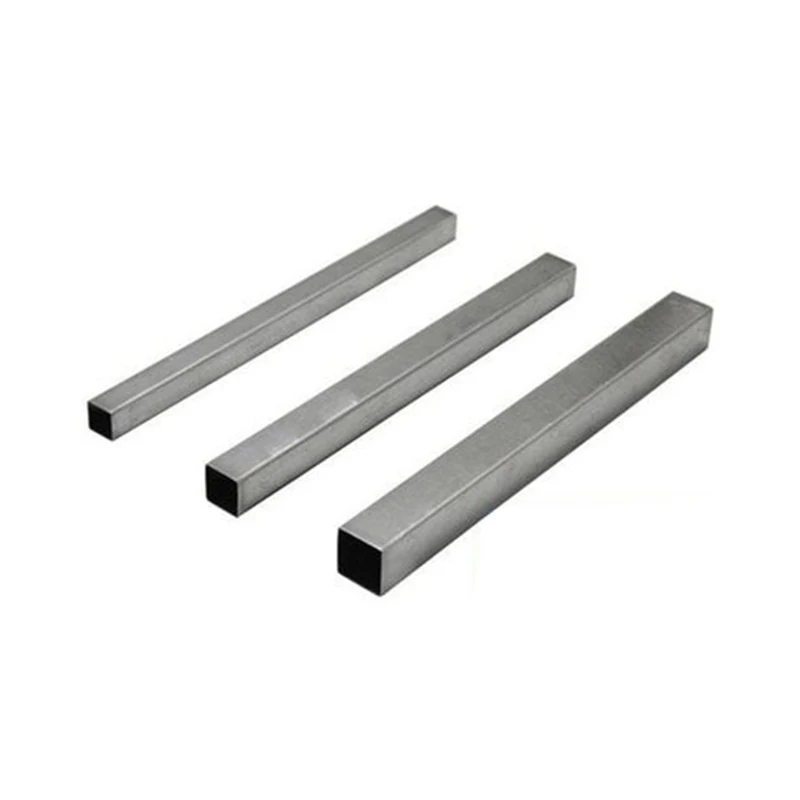
Superior Structural Integrity and Strength
Enhanced Pressure Resistance
The manufacturing process of seamless steel tubes eliminates potential weak points that commonly exist in welded seams. This absence of joints results in uniform wall thickness and consistent material properties throughout the entire tube length. The continuous structure allows these tubes to withstand significantly higher internal pressures compared to their welded counterparts. Industries dealing with high-pressure applications, such as hydraulic systems and pressure vessels, rely heavily on this enhanced pressure resistance capability.
Engineering calculations demonstrate that seamless tubes can handle pressure ratings up to 30% higher than equivalent welded tubes of the same dimensions. This increased capacity translates directly into improved safety margins and reduced risk of catastrophic failures in critical applications. The uniform stress distribution across the tube wall ensures predictable performance under extreme operating conditions.
Improved Tensile Strength Properties
The molecular structure of seamless steel tubes exhibits superior grain flow characteristics due to the manufacturing process. During production, the steel billet is heated and pierced, creating a continuous grain structure that enhances overall tensile strength. This improved metallurgical structure provides better resistance to both longitudinal and circumferential stresses, making these tubes ideal for structural applications requiring high load-bearing capacity.
Laboratory testing consistently shows that seamless steel tubes demonstrate higher yield strength and ultimate tensile strength compared to welded alternatives. The absence of heat-affected zones, which are inherent in welded products, ensures that material properties remain consistent throughout the tube structure. This uniformity is particularly valuable in applications where predictable mechanical behavior is crucial for design calculations and safety assessments.
Manufacturing Process Advantages
Precision Dimensional Control
The manufacturing process for seamless steel tubes allows for exceptional dimensional accuracy and consistency. Modern production facilities utilize advanced piercing and rolling techniques that maintain tight tolerances on both internal and external diameters. This precision control eliminates the variations commonly associated with welding processes, where heat input can cause localized distortions and dimensional irregularities.
Quality control systems in seamless tube production can maintain dimensional tolerances within ±0.5% of specified values, significantly tighter than what is achievable with welded alternatives. This precision is particularly important in applications requiring exact fit tolerances, such as automotive components, precision machinery, and instrumentation tubing. The consistent dimensions also simplify installation procedures and reduce the need for field modifications.
Surface Quality and Finish
The continuous manufacturing process of seamless steel tubes results in superior surface quality both internally and externally. The absence of weld beads eliminates potential stress concentration points and reduces surface roughness that can impact fluid flow characteristics. Internal surface smoothness is particularly critical in applications involving fluid transport, where surface irregularities can cause turbulence, pressure drops, and increased pumping costs.
Advanced finishing techniques applied during seamless tube production can achieve surface roughness values as low as 0.4 micrometers Ra. This exceptional surface quality reduces friction coefficients in fluid transport applications and minimizes the potential for particle accumulation or contamination. The smooth surfaces also facilitate easier cleaning and maintenance procedures, contributing to improved operational efficiency over the tube's service life.
Application-Specific Performance Benefits
Oil and Gas Industry Applications
In the oil and gas sector, seamless steel tubes provide critical advantages for both upstream and downstream operations. The high-pressure capabilities make them ideal for wellhead equipment, transmission pipelines, and refinery process systems. The corrosion resistance properties, when combined with appropriate alloy compositions, enable reliable performance in harsh environments containing hydrogen sulfide, carbon dioxide, and other aggressive compounds.
Exploration and production operations benefit from the reliability of seamless tubes in critical safety systems and blowout preventers. The predictable failure modes and absence of weld-related defects contribute to enhanced operational safety and reduced maintenance requirements. Additionally, the ability to manufacture seamless tubes in various grades of steel allows for optimized material selection based on specific service conditions and regulatory requirements.
Automotive and Transportation Applications
The automotive industry extensively utilizes seamless steel tubes in applications ranging from fuel injection systems to structural components. The precision dimensions and consistent material properties enable tight integration with modern engine management systems and emission control equipment. The superior fatigue resistance of seamless tubes is particularly valuable in dynamic applications where repeated stress cycles are common.
Transportation applications benefit from the weight optimization potential of seamless tubes. The ability to use thinner wall sections while maintaining strength requirements contributes to overall vehicle weight reduction and improved fuel efficiency. The corrosion resistance properties also extend service life in challenging environments, reducing maintenance costs and improving reliability for fleet operators.
Economic and Operational Advantages
Reduced Maintenance Requirements
The inherent reliability of seamless steel tubes translates into significant operational cost savings through reduced maintenance requirements. The absence of welded seams eliminates the most common failure points found in piping systems, leading to fewer unplanned shutdowns and emergency repairs. Predictive maintenance programs can be more effective with seamless tubes due to their consistent degradation patterns and predictable service life characteristics.
Statistical analysis of industrial maintenance records shows that seamless tube installations typically experience 40-60% fewer failures compared to welded systems operating under similar conditions. This reliability advantage becomes increasingly valuable in critical applications where downtime costs can exceed thousands of dollars per hour. The reduced maintenance burden also allows maintenance teams to focus resources on other system components and preventive activities.
Long-Term Cost Effectiveness
While the initial procurement cost of seamless steel tubes may be higher than welded alternatives, total cost of ownership calculations consistently favor seamless products in demanding applications. The extended service life, reduced maintenance requirements, and improved reliability combine to provide superior economic returns over the product lifecycle. Insurance considerations also favor seamless tubes, with many carriers offering reduced premiums for systems utilizing these higher-reliability components.
Energy efficiency benefits contribute additional economic value through reduced operating costs. The smooth internal surfaces of seamless tubes minimize pressure losses in fluid transport systems, resulting in lower pumping energy requirements. In large industrial installations, these energy savings can amount to substantial cost reductions over the system's operational life, often exceeding the initial premium paid for seamless products.
Quality Assurance and Testing Standards
Non-Destructive Testing Capabilities
The homogeneous structure of seamless steel tubes enables more comprehensive and reliable non-destructive testing procedures. Ultrasonic testing, eddy current inspection, and hydrostatic pressure testing can be performed with greater accuracy and sensitivity compared to welded products. The absence of weld zones eliminates interpretation complexities associated with different material zones and heat-affected areas.
Advanced testing protocols can detect internal defects as small as 2% of wall thickness in seamless tubes, providing exceptional quality assurance for critical applications. This testing capability is particularly important in industries with stringent safety requirements, such as nuclear power generation, aerospace, and chemical processing. The reliable test results enable more accurate remaining life assessments and condition-based maintenance strategies.
Certification and Traceability
Manufacturing processes for seamless steel tubes typically provide superior material traceability and certification documentation. The controlled production environment enables comprehensive tracking of raw material sources, heat treatment parameters, and quality control test results. This detailed documentation is essential for applications requiring full material pedigree, such as nuclear components and critical infrastructure projects.
Certification bodies and regulatory agencies often have more streamlined approval processes for seamless tubes due to the consistent manufacturing processes and proven performance history. This regulatory advantage can significantly reduce project timelines and approval costs, particularly in highly regulated industries. The standardized testing procedures and well-established quality metrics also simplify procurement specifications and supplier qualification processes.
FAQ
What is the main difference between seamless and welded steel tubes?
The primary difference lies in the manufacturing process and resulting structural characteristics. Seamless steel tubes are formed from a solid steel billet through heating and piercing, creating a continuous structure without joints. Welded tubes are manufactured by forming flat steel strips into a tube shape and welding the seam. This fundamental difference results in seamless tubes having superior pressure resistance, uniform wall thickness, and consistent material properties throughout their structure, while welded tubes may have variations at the weld seam that can affect performance under high-stress conditions.
Are seamless steel tubes suitable for high-temperature applications?
Yes, seamless steel tubes are particularly well-suited for high-temperature applications due to their homogeneous structure and absence of welded seams. The continuous grain structure provides consistent thermal expansion properties and eliminates potential failure points that can develop in weld zones under thermal cycling. When manufactured from appropriate high-temperature alloys, seamless tubes can operate reliably at temperatures exceeding 1000°F while maintaining their structural integrity and pressure-bearing capabilities.
How do seamless steel tubes compare in terms of cost-effectiveness?
While seamless steel tubes typically have higher initial purchase costs compared to welded alternatives, they often provide superior total cost of ownership in demanding applications. The enhanced reliability, reduced maintenance requirements, extended service life, and improved operational efficiency combine to deliver significant long-term economic benefits. Industries with high downtime costs or critical safety requirements frequently find that the reliability advantages of seamless tubes justify the initial cost premium through reduced operational risks and maintenance expenses.
What quality standards apply to seamless steel tube manufacturing?
Seamless steel tube manufacturing is governed by numerous international standards including ASTM, API, DIN, and JIS specifications. These standards define requirements for chemical composition, mechanical properties, dimensional tolerances, and testing procedures. Common standards include ASTM A106 for high-temperature service, API 5L for pipeline applications, and ASTM A519 for mechanical tubing. Manufacturers must demonstrate compliance through comprehensive testing and documentation, with third-party inspection and certification often required for critical applications.